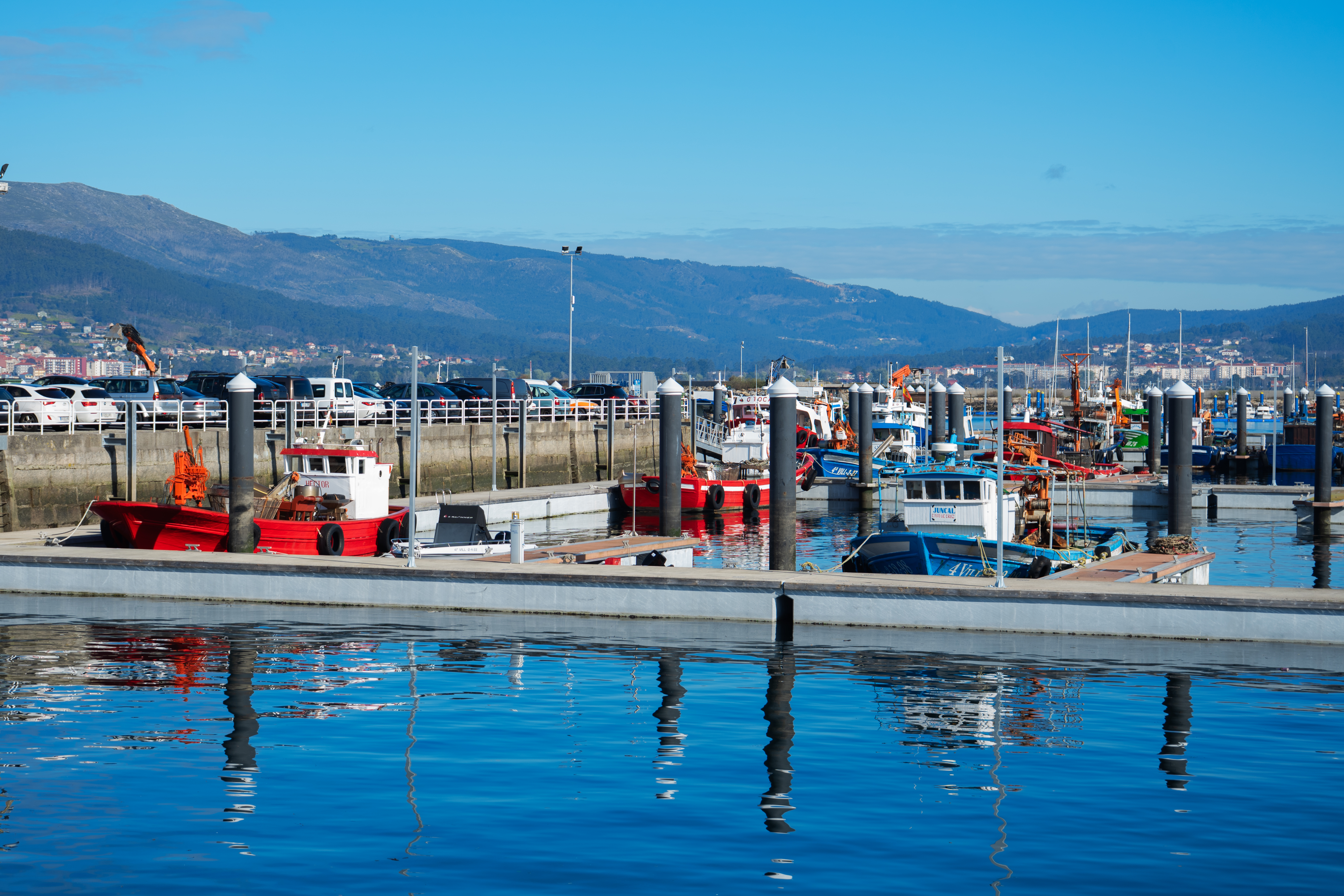
1-Day Trip
During this day, you will visit the most beautiful and interesting places in the region, which will surely remain in your memory and help you gain a comprehensive view of Barbanza-Arousa.
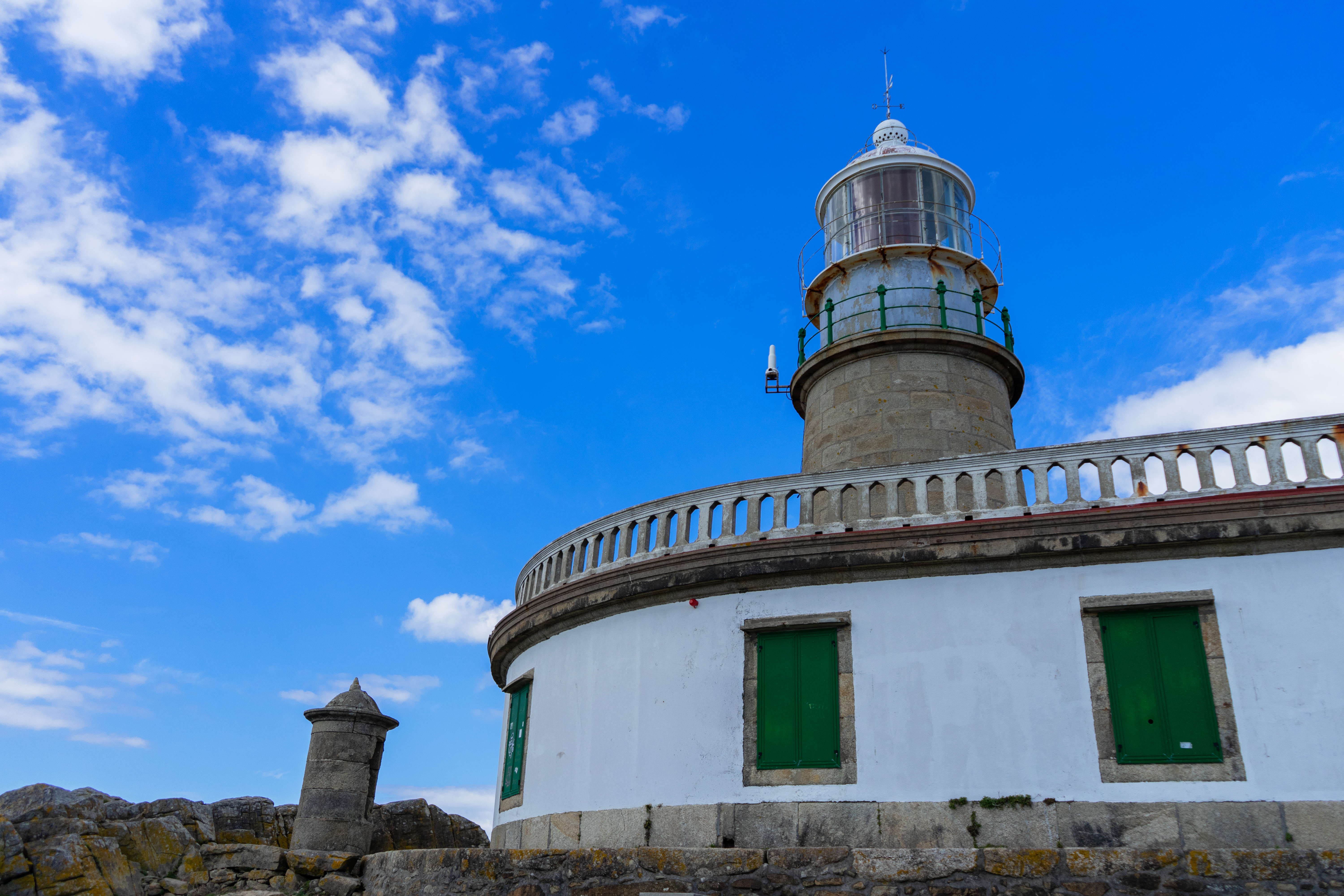
You will start your journey heading to the attractive area of Corrubedo, where you will find a majestic lighthouse, a traditional fishing village, and the Dune, which leaves no visitor indifferent.
When sailors decided to venture further into the sea and navigate not only by day using landmark features, the need arose to create lighted beacons to make coastlines recognizable, giving birth to lighthouses. The word "lighthouse" in Romance languages (faro) originates from Pharos, an island off Alexandria where one of the Seven Wonders of the Ancient World was built in 279 BC.
The ninth lighthouse built along the Galician coast was the Corrubedo Lighthouse, where today's route begins. Its location will surprise you, making it clear why it was so crucial on this treacherous Atlantic coast marked by numerous shipwrecks. However, miscoordination with other lighthouses like Fisterra, Cíes, or Sálvora sometimes led to confusion, such as during the famous shipwreck of the Santa Isabel liner off Sálvora Island—popularly known as the "Galician Titanic." Following this tragedy, the lighthouse's original white light was replaced with a red light, earning it the nickname "the communist lighthouse."
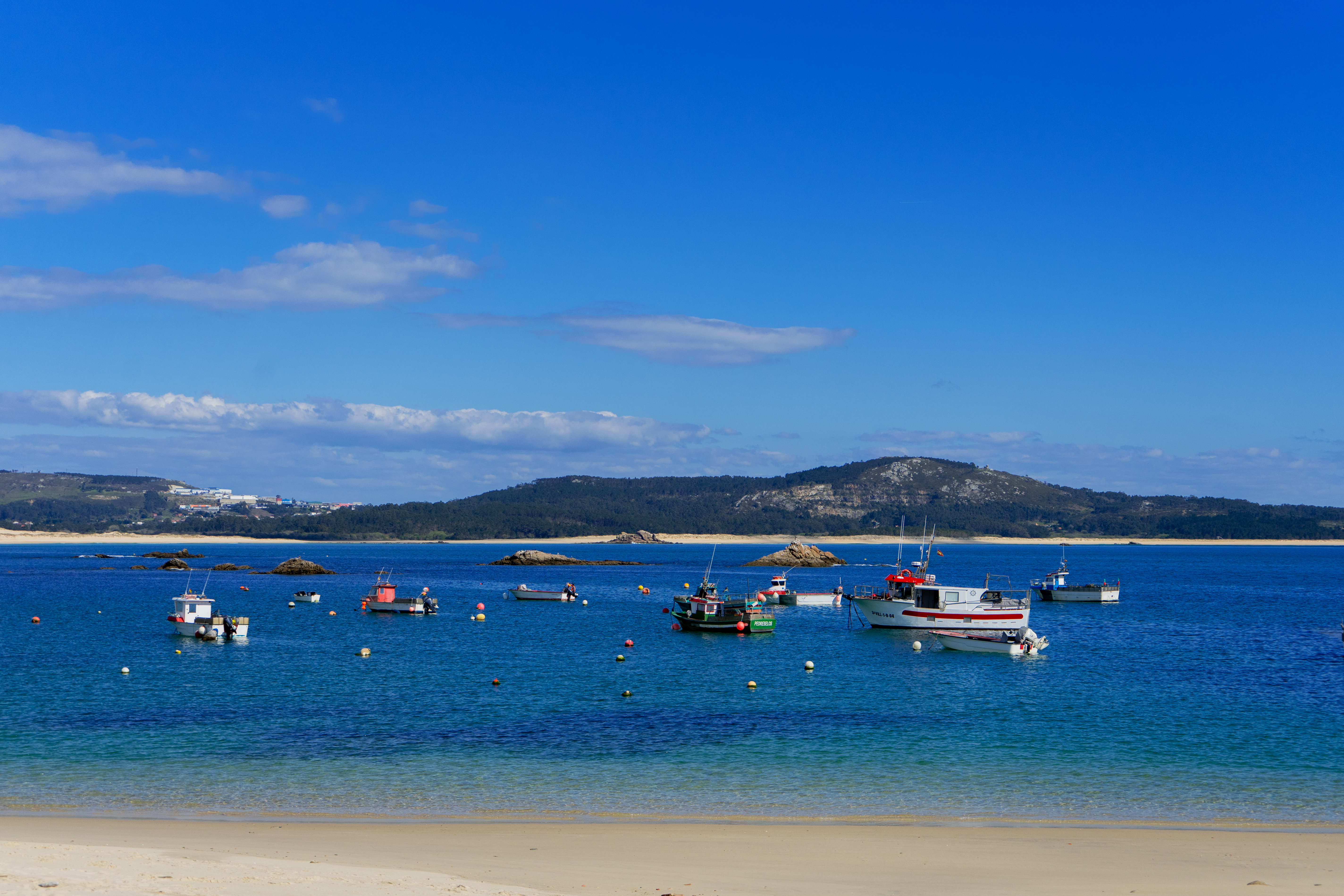
The next stop is the coastal village of Corrubedo. Strolling through its narrow streets, you will discover a charming fishing town deeply connected to the sea, accompanied by the whistle of the wind and the sound of crashing waves.
You will also learn about Ribeira's traditional vessel: the dorna. It was introduced to the Rías Baixas likely as a scaled-down adaptation of the Viking drakkar, since these shores suffered frequent Viking raids aiming to besiege Santiago de Compostela during the Early Middle Ages.
Evidence suggests that prior to the 12th century, Galician sailors adapted Nordic technology to create a craft unmatched in functionality, ease of construction, and material efficiency, reaching modern times with minimal design changes.
One of Ribeira's most famous festivities is the Festa da Dorna, celebrated every July 24th. It honors the town's special bond with its flagship vessel. The festival originated as a charitable movement to raise funds for poorer families, giving them a means of income through fishing.
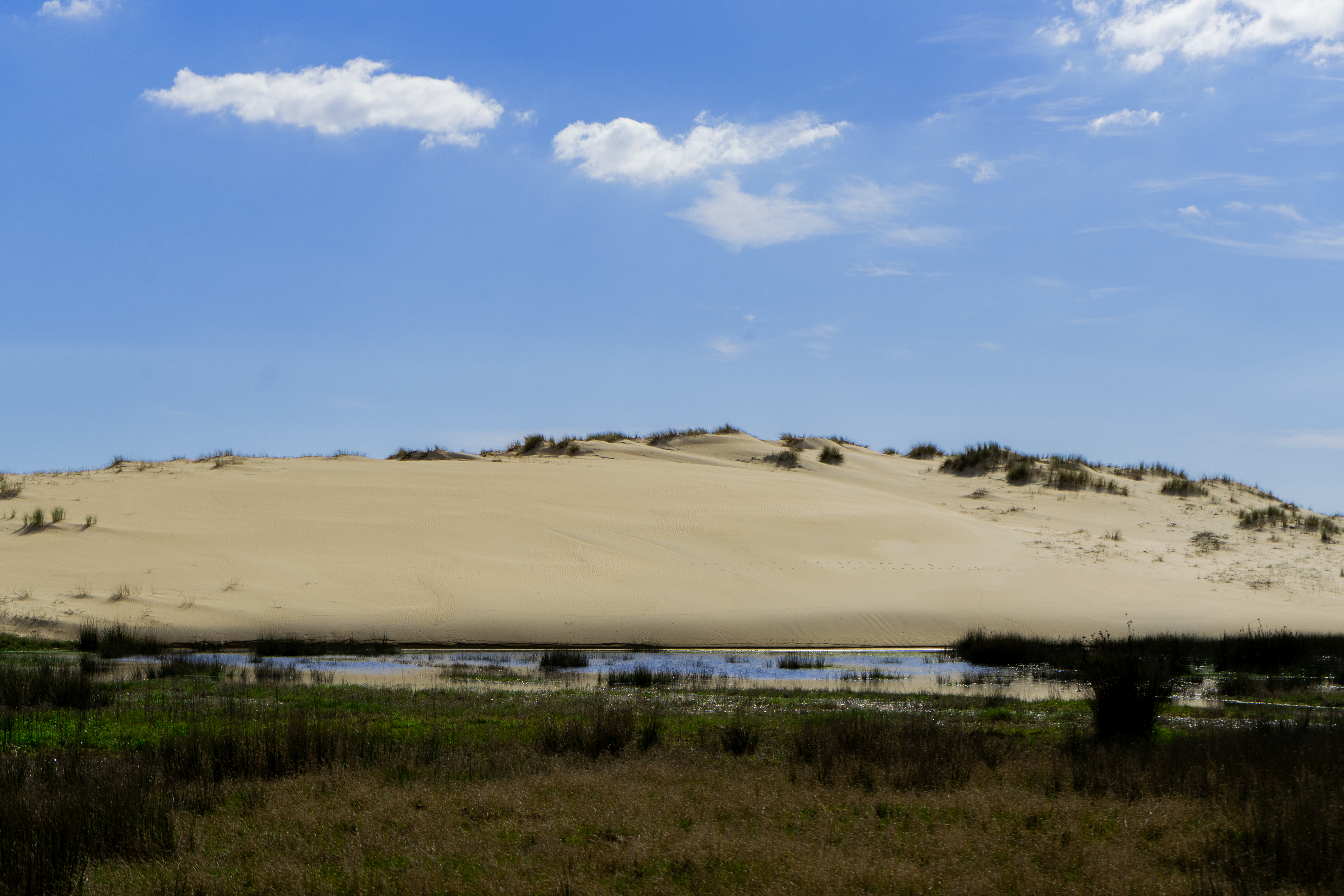
You cannot leave Corrubedo without visiting its breathtaking sand dune, the largest in Galicia. Beyond its impressive view, legend links this area to the lost city of Atlantis. Nearby Carregal Lagoon is said to submerge the sunken city of Valverde; local lore holds that on clear days, house beams and bronze mooring rings can still be glimpsed beneath the water.
Other tales suggest the city of Valverde lies buried right beneath the massive dune itself.
Another captivating site on the tour is the Axeitos Dolmen, located in a peaceful woodland in the hamlet of Bretal. Galician mythology is rich with legends surrounding megaliths, petroglyphs, and hillforts, often featuring mythical underground beings known as mouros and mouras who guard hidden treasures. This dolmen is also known as A Pedra do Mouro (The Moor's Stone).
Local folklore also explains the name of Bretal through a tale involving Saint James the Apostle, who witnessed the mythical destruction of Valverde and exclaimed, "Non quero ver tal" ("I do not wish to see such a thing").
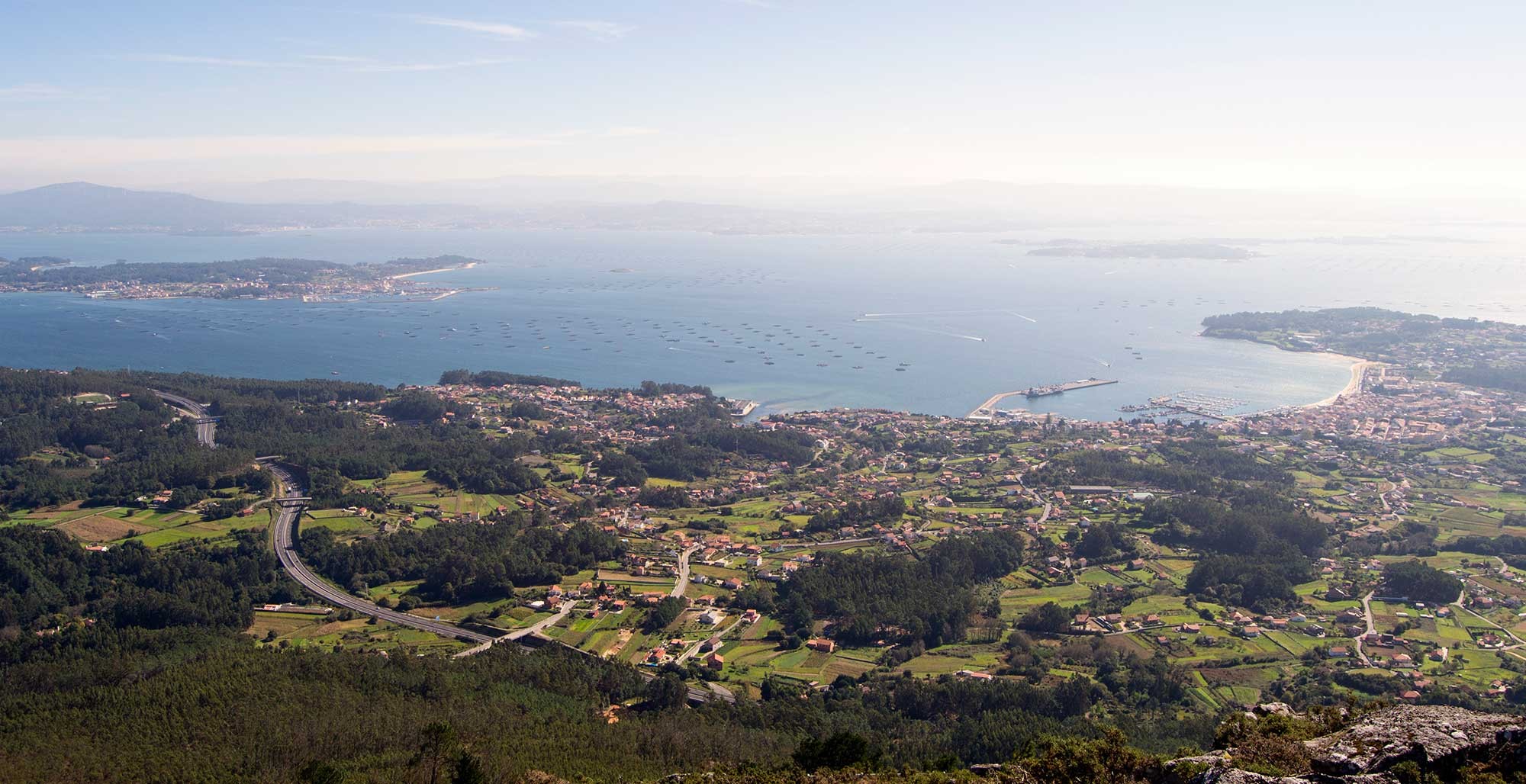
The municipality of A Pobra do Caramiñal welcomes you at over 500 meters above sea level at the A Curota viewpoint. On the drive up, you will see a monument to Valle-Inclán, the famous writer closely tied to the town. From the top, you will enjoy sweeping views over the Galician coastal inlets known as rías, which legend says were formed when God rested his hands upon Galicia after creating the world.
Looking down, you will see the Ría de Arousa. The shelter of this sea inlet makes its waters calm and exceptionally fertile, ideal for shellfish farming. This is evident from the vast floating mussel platforms (bateas) dotting the bay, which form the backbone of the local economy.
According to Christian tradition, the Ría de Arousa also witnessed the Traslatio—the sea voyage transporting the remains of Saint James the Apostle by boat from Jaffa (Palestine) to Padrón in the 1st century AD, sailing up the bay into the Ulla River towards Iria Flavia.
However, the Ría de Arousa was not always peaceful; serving as the maritime gateway to Saint James's tomb, it suffered frequent naval attacks over the centuries by Vikings, Saracens, pirates, and privateers.
Out in the bay lies Sálvora Island, a land rich in history and myth. Visiting the island, you will encounter a mermaid statue. Legend says the knight Roldán fled to Sálvora after the Battle of Roncesvalles and met a mysterious mermaid named Mariña; their child marked the origin of the noble Mariño family lineage, whose coats of arms adorn buildings across the region.
Off Sálvora's shores, the steamship Santa Isabel sank in 1921. On January 2nd, local women rowed out into stormy seas in small dornas to rescue over fifty survivors, earning them renown as the "Heroines of Sálvora."
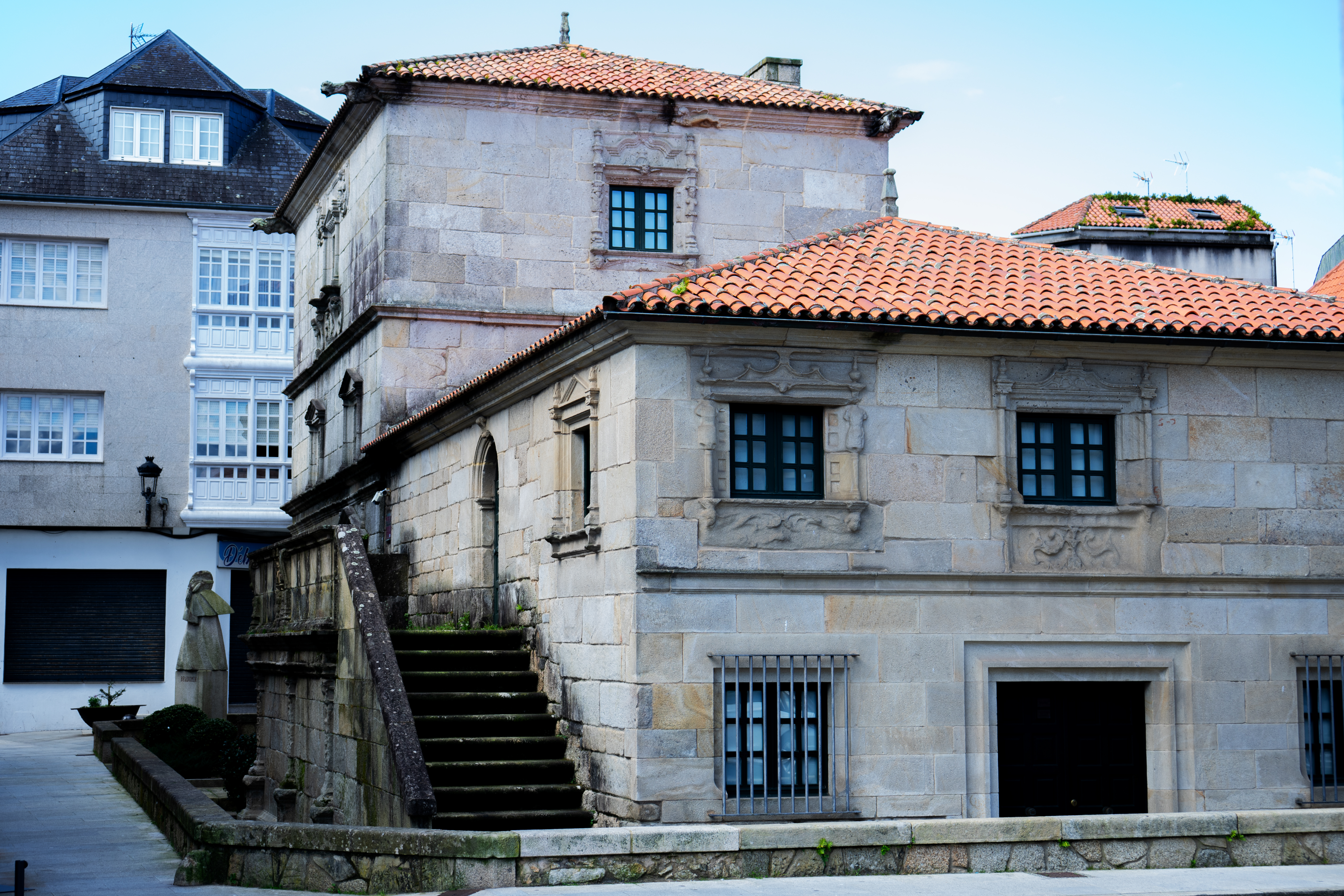
The next stop brings you to central A Pobra do Caramiñal at O Castelo Park. Here stands the Virgin of the Pilgrim Wayside Cross (part of the Maritime Stations of the Cross) and the Casa Mariñeira, one of the town's few remaining traditional fishermen's houses. The harbor features Europe's primary tuna unloading port alongside a major cannery district, while the historic town center houses Torre Bermúdez, an elegant manor hosting the Valle-Inclán Museum.
Entering the neighboring town of Boiro, you will explore Cabo de Cruz, a picturesque fishing village with narrow streets, colorful houses, and A Ribeira Grande beach. Cabo de Cruz sits near the ancient Iron Age hillfort of O Achadizo.
This memorable day concludes in the municipality of Rianxo. Driving up to A Muralla viewpoint offers sweeping vistas over the coastal bays, stretching as far as the towers of Santiago de Compostela Cathedral on clear days.
In Rianxo's town center, you can visit the homes of legendary Galician writers Manuel Antonio, Rafael Dieste, and Castelao. At A Praciña, you can observe traditional "oar houses" (casas do remo) built to the width of an oar, while a stroll along A Torre beach reveals the 13th-century ruins of O Castelo da Lúa and its romantic legend.