2-Day Itinerary
During this two-day tour through Barbanza-Arousa, you will explore the four municipalities that make up the region, discovering their rich heritage, wild nature, and welcoming locals.
Day 1: A Pobra do Caramiñal - Ribeira
The tour begins in A Pobra do Caramiñal, which, despite being the smallest of the four municipalities, will surprise you with its rich offerings.
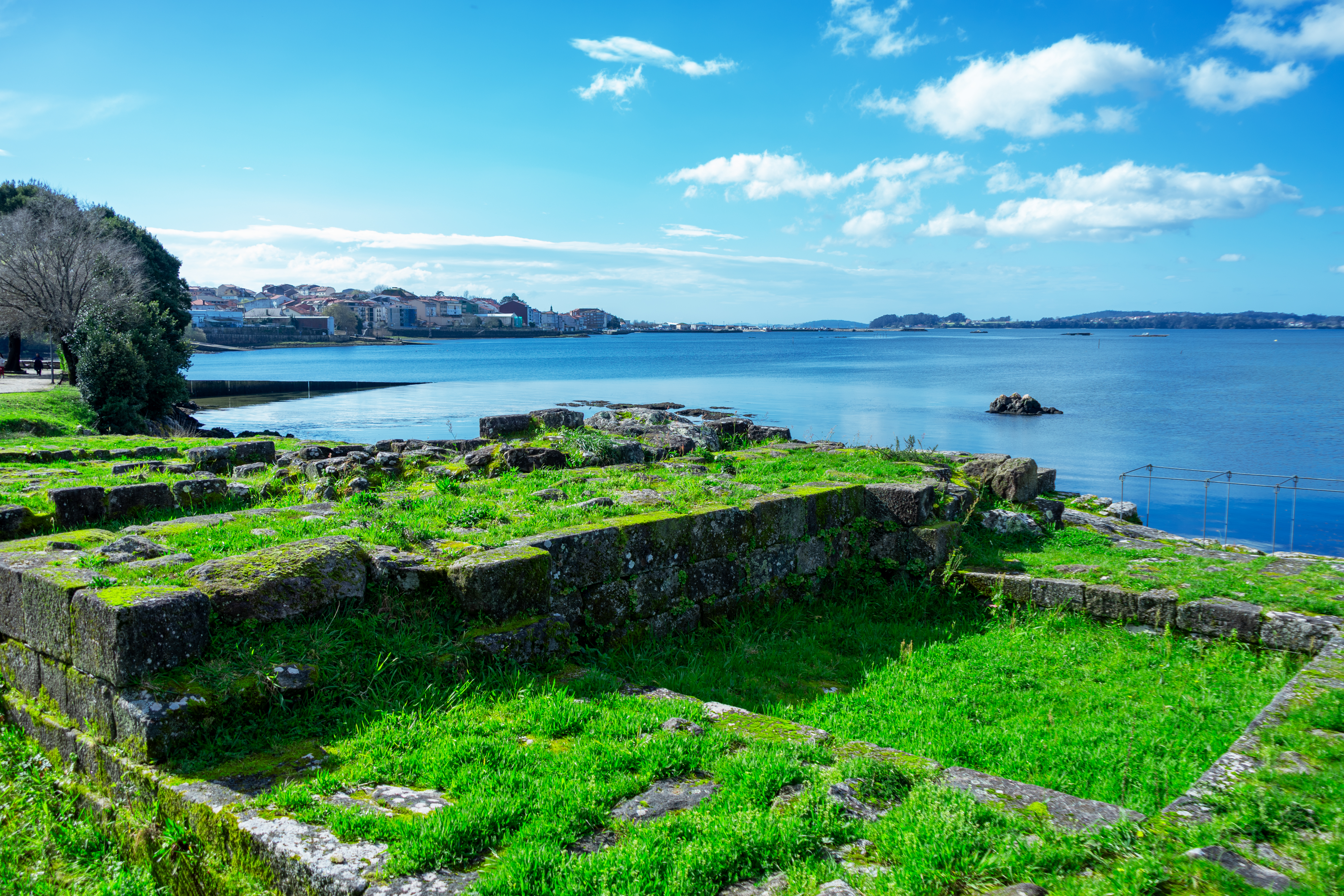
In this charming town, your visit starts at O Castelo Park, a former fortress site destroyed during the 15th-century Irmandiño Revolts. Here you will find the Pilgrim Virgin Wayside Cross, part of the Maritime Stations of the Cross, and the Church of Santiago do Deán. This region is directly linked to the Way of St. James, as the stone boat bearing the Apostle's remains is said to have entered these waters in 44 AD.
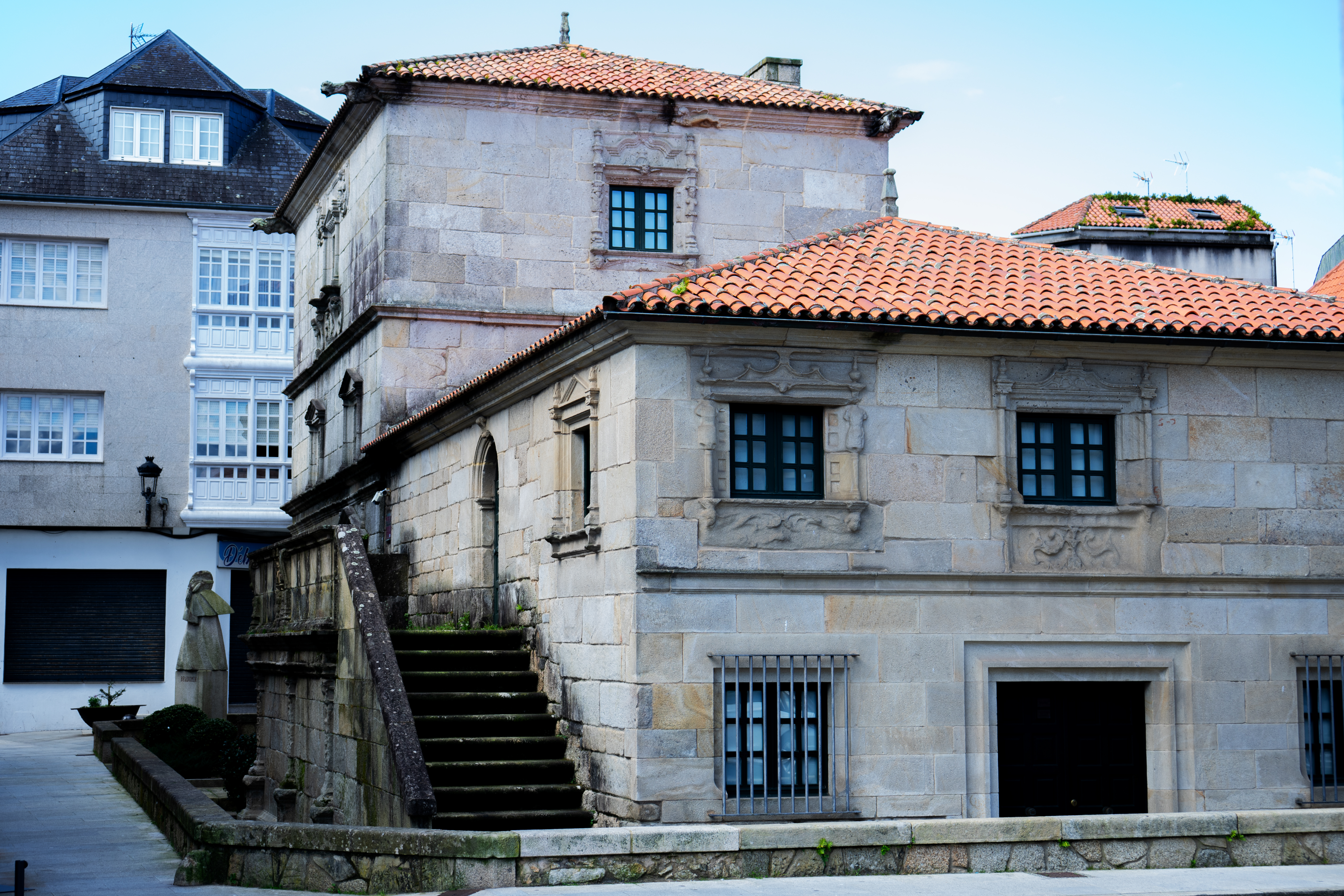
In the same park, you can see the Casa Mariñeira (a traditional fisherman's house) and visit the tuna and mussel boat docks. Highlights also include the "Catalan Quarter" in O Arenal and grand manors such as Torre Bermúdez (16th century), now housing the Valle-Inclán Museum, whose ornate facade features figures of a mermaid and a triton.
Next, marvel at the Pedras River and its natural rock pools, surrounded by lush vegetation and smooth river stones. Local legend says Saint Maurus navigated the river in a stone boat while fleeing persecutors, and divine intervention filled the riverbed with boulders to block their path.
You will then head to A Curota Viewpoint, sitting 500 meters above sea level and featuring a statue of writer Valle-Inclán. From here, you can enjoy sweeping views over the Ría de Arousa and its floating mussel platforms (bateas).
According to tradition, the coastal inlets (rías) were created when God rested His hands upon Galicia after creating the world. These waters witnessed the maritime journey (Traslatio) carrying Saint James's body to Padrón, serving throughout history as a defense line against Viking, Saracen, and pirate raids.
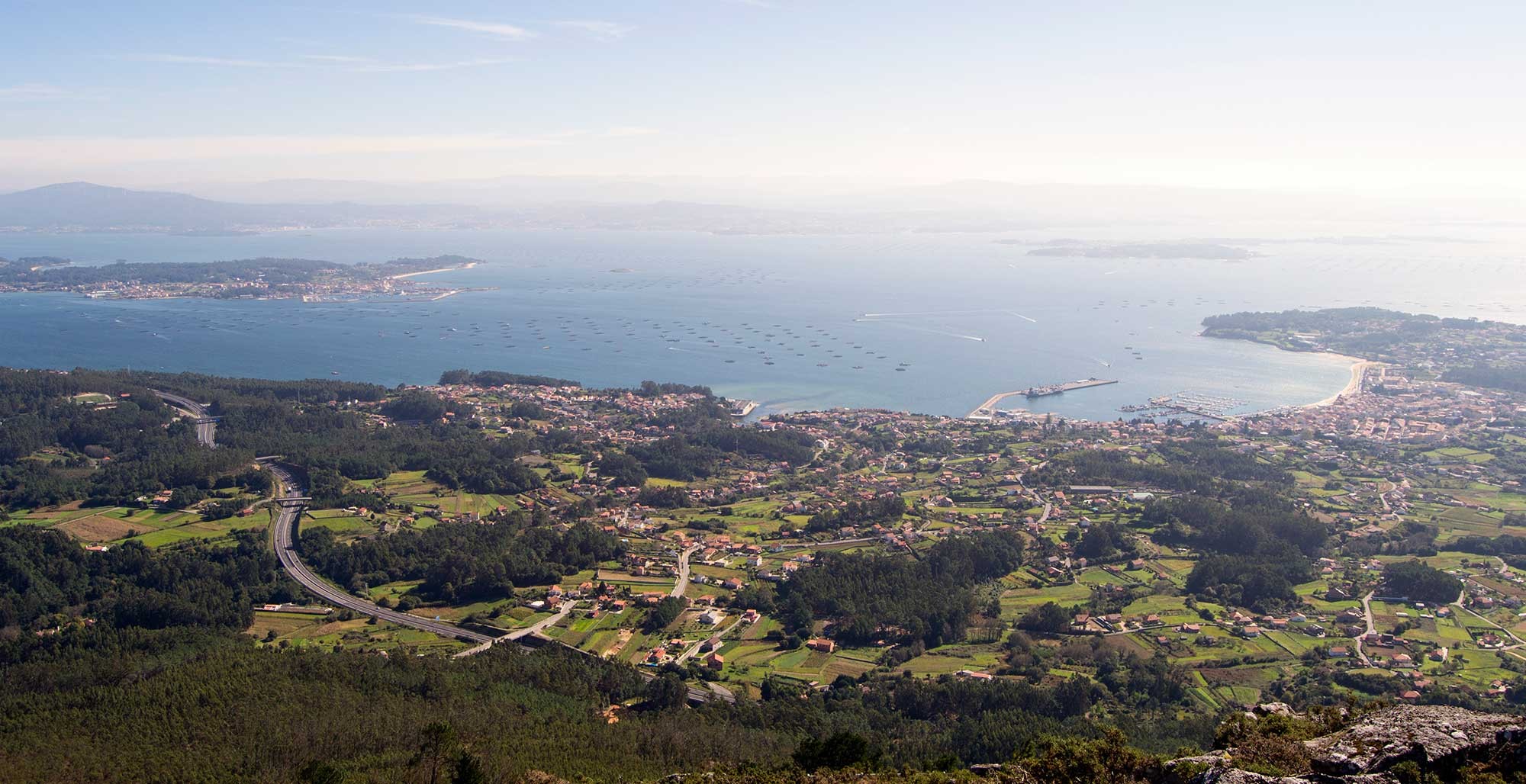
From the summit, you can spot Sálvora Island. Legend tells that the knight Roldán fled to the island after the Battle of Roncesvalles and met the mermaid Mariña, founding the noble Mariño family line.
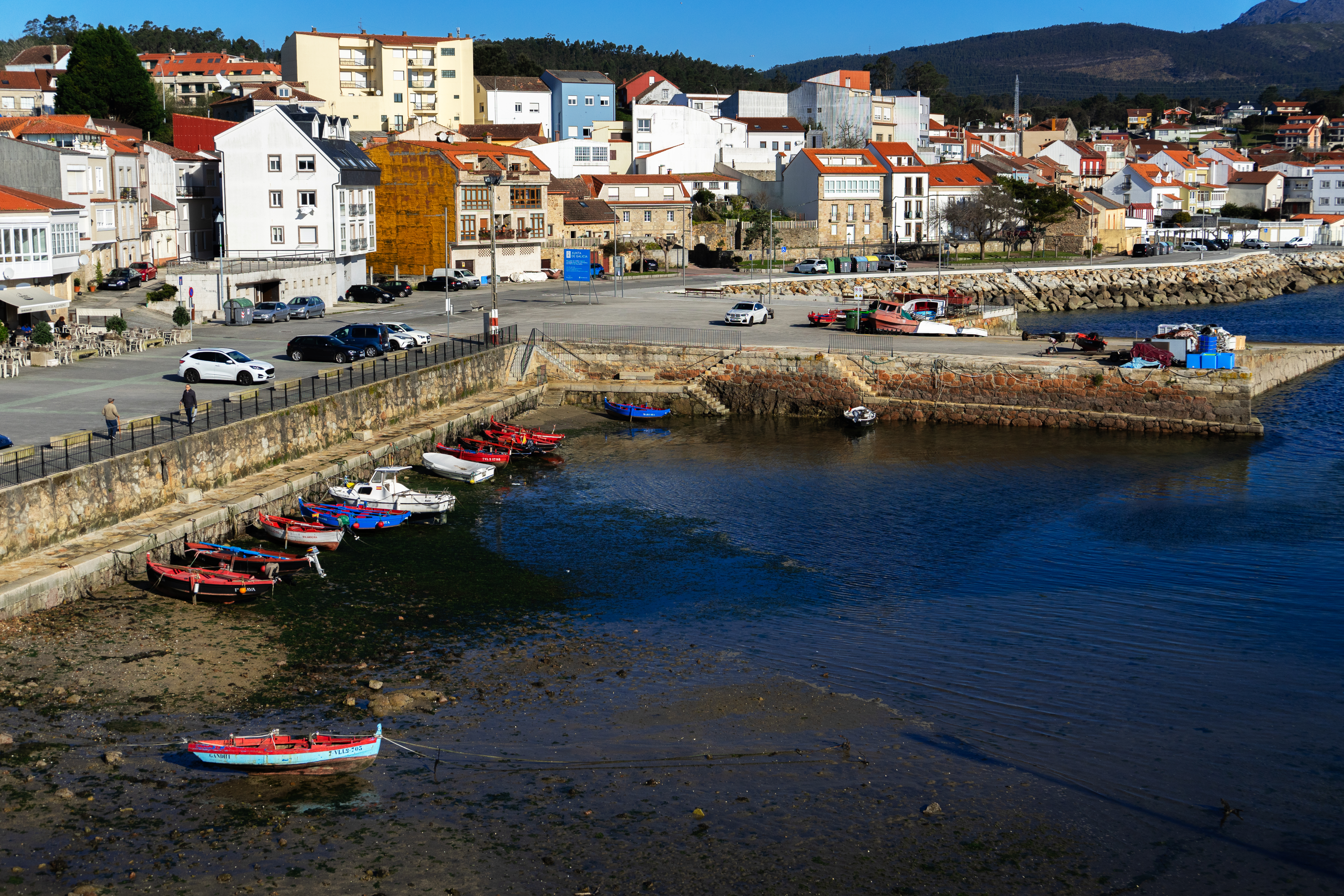
In Ribeira, the visit begins in Palmeira, a coastal village featuring O Castelo viewpoint, an emigrant monument, and an 18th-century harbor where traditional dorna boats moor. Further along, from A Pedra da Ra viewpoint, you can take in the Corrubedo Natural Park, O Vilar beach, and sites tied to legends of Saint James's horse jumping across the bay or the sunken city of Valverde.
Before sunset, visit the Axeitos Dolmen (known as A Pedra do Mouro), a megalithic monument with nearly 6,000 years of history.
To cap off the first day, head to the Corrubedo Lighthouse to experience an unforgettable sunset. Built in 1853, it was the ninth lighthouse constructed along the Galician coast.
Nicknamed "the communist lighthouse," its original white beam was changed to red following confusion during the 1921 Santa Isabel shipwreck off Sálvora (the "Galician Titanic"), where three courageous local women rescued over 50 survivors using their small dorna rowing boats.
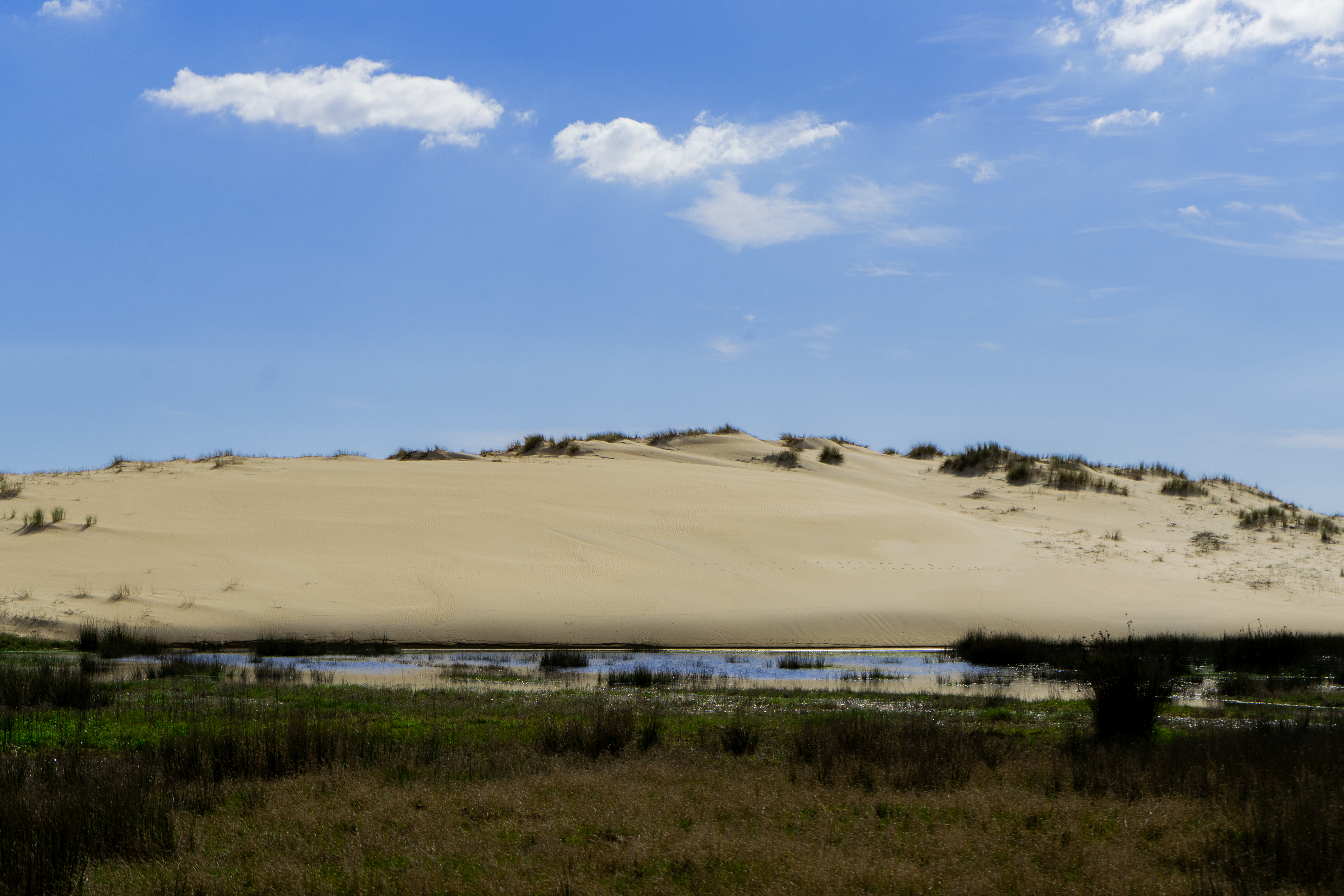
Finally, admire the massive Corrubedo Sand Dune, standing over 20 meters high and stretching for more than a kilometer.
Day 2: Boiro - Rianxo
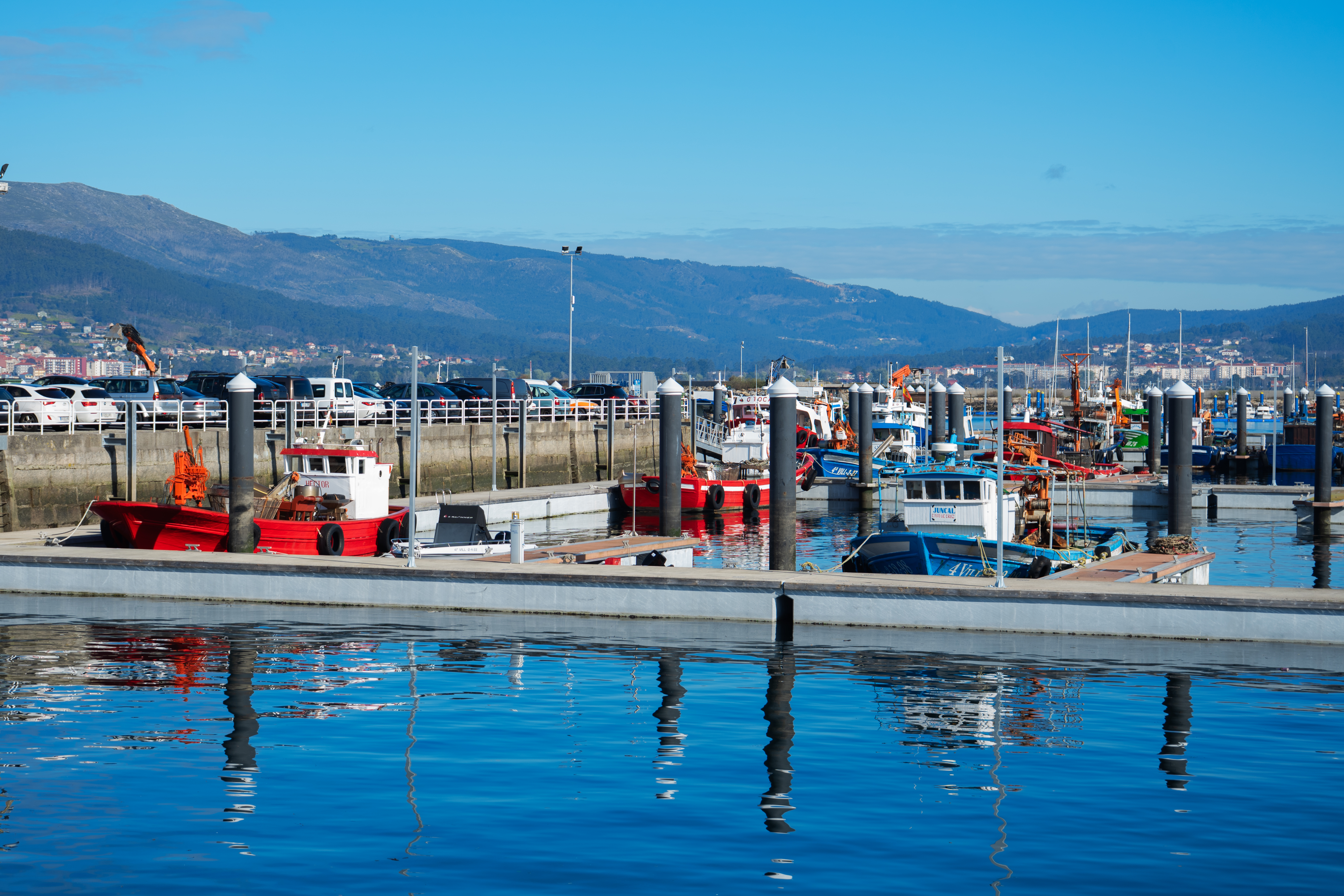
The second day takes you through Boiro and Rianxo. Start in Boiro at the coastal village of Cabo de Cruz, known for its vibrant waterfront houses (painted with leftover boat paint), historic pier, and proximity to O Achadizo Iron Age hillfort.
Continue to the Neixón Hillforts (Castro Grande and Castro Pequeno), among the oldest Iron Age settlements in Galicia, set in a scenic landscape rich with legends of hidden treasures and mythical mouros.
Afterward, drive up to A Muralla Viewpoint for sweeping panoramas over the Arousa and Muros-Noia bays, extending to the distant spires of Santiago Cathedral on clear days.
In the parish of Isorna, visit A Aldea and Punta do Cabo along the Ulla River, offering views across to Pontevedra, Monte Palleiro, and Monte das Cercas.
Here stands a wayside cross belonging to the world's only maritime-fluvial Stations of the Cross (featuring 17 crosses across the bay and river), commemorating the route of the Traslatio.
Isorna was historically a vital defense point: straw signal fires were lit atop Monte Palleiro to warn of Viking raids, while river chains and fortresses like Torres de Oeste guarded the water route to Santiago de Compostela.
The journey continues in central Rianxo, strolling past the homes of renowned writers Manuel Antonio, Rafael Dieste, and Castelao. At A Praciña, discover traditional "oar houses" (casas do remo), built to the width of a boat's oar.
To conclude the tour, walk along A Torre beach at dawn or dusk to see the ruins of the 13th-century O Castelo da Lúa, former seat of Paio Gómez Chariño.
The castle takes its name from a tragic romance: two fleeing lovers were struck by arrows and washed ashore together, bringing a legendary conclusion to your journey through Barbanza-Arousa.